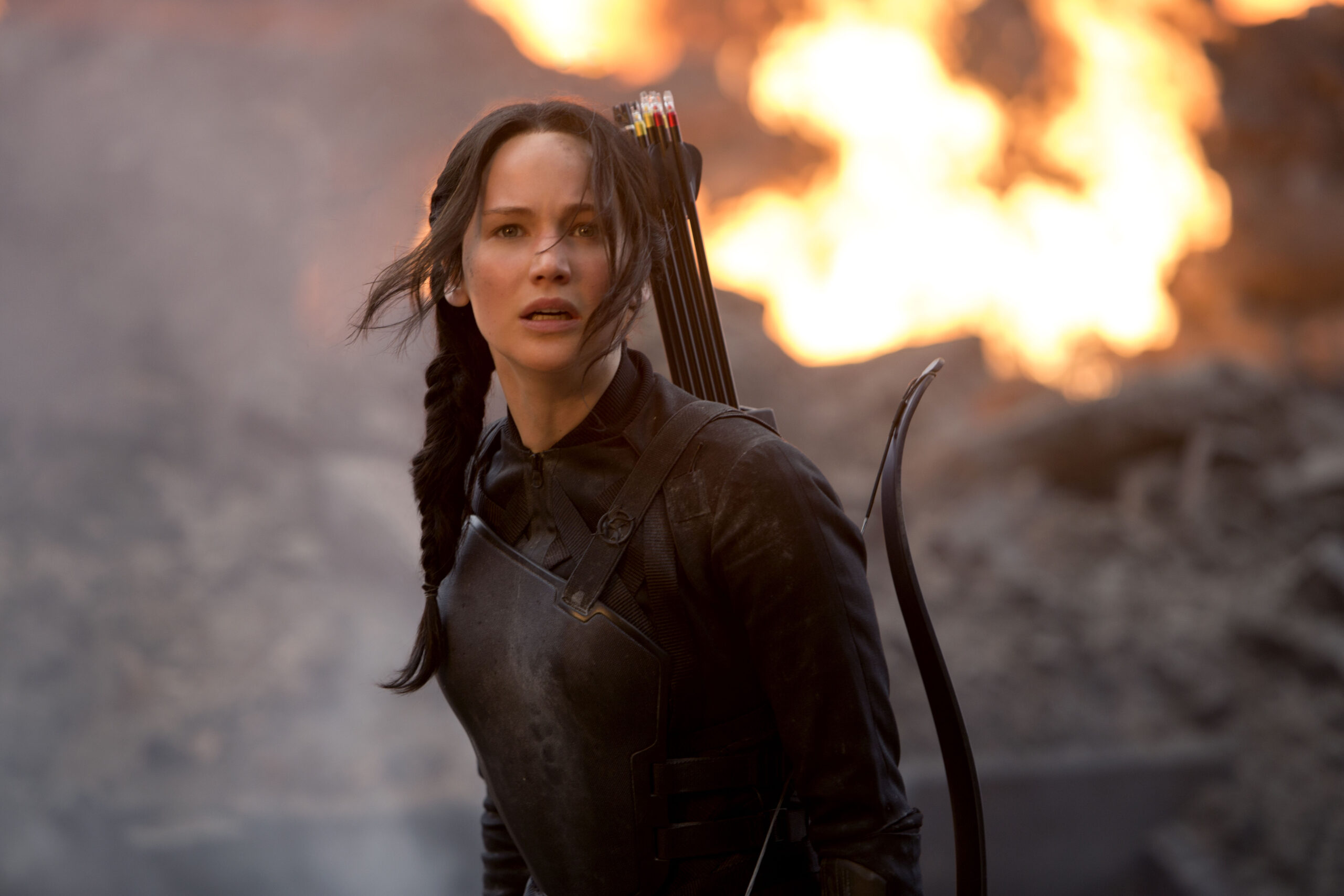
Every Hunger Games Arena, Ranked
Written by on Aug 14, 2026 11:58 AM


Written by on Aug 14, 2026 11:58 AM
In Panem, the arena is never just a setting.
It is a weapon.
Across The Hunger Games Series, each arena reveals something about the Capitol and the cruel system it has built. Some overwhelm the tributes with fire, poison, and engineered creatures. Others strip away the spectacle and expose the Games for what they have always been: children fighting for survival while the nation watches.
The best arenas force alliances, reward quick thinking and push characters toward decisions that change Panem. They can turn a tribute into a victor, a victor into a symbol, and a handful of berries into the beginning of a revolution.

To determine which arena deserves the top spot, we considered its visual design, dangers, strategic possibilities, and importance to the larger story. We are focusing on the arenas shown or meaningfully depicted across the 5 films, from the brief footage of the 73rd Hunger Games to the Quarter Quell that changed Panem forever.
May the odds be ever in their favor. They are going to need them.
Our first arena receives only a few seconds of screen time, but those seconds tell us almost everything we need to know.
Early in The Hunger Games, Katniss watches footage from the previous year’s competition. A tribute runs through a landscape of shattered concrete and abandoned buildings before another tribute attacks him with a brick. The Capitol presents the moment as entertainment, complete with enthusiastic commentary, while Katniss and Gale watch from District 12.
The ruined urban environment stands apart from the forests that later define Katniss’s time in the arena. There are no sweeping vistas or elaborate landmarks. Every collapsed wall could provide protection or conceal another tribute. Rubble becomes both an obstacle and a weapon. Survival would depend less on wilderness experience and more on improvisation.
Its greatest weakness in this ranking is simply how little we see. We do not know its full layout, what disasters the Gamemakers created or how the final confrontation unfolded. Still, the glimpse serves an important purpose. Before Katniss enters an arena herself, the audience sees how thoroughly the Capitol has transformed suffering into a televised sport.
The 73rd arena may rank last, but it delivers an early warning: in The Hunger Games, anything can become a weapon.
64 years before Katniss Everdeen volunteered for her sister, Lucy Gray Baird walked into a very different kind of Hunger Games.
In The Hunger Games: The Ballad of Songbirds & Snakes, the 10th Hunger Games take place inside the Capitol Arena, an aging stadium once used for sporting and military events. It lacks the artificial wilderness, hidden cameras, and carefully controlled ecosystems of the later Games. At first, it appears almost primitive by Capitol standards. Tributes enter an open field surrounded by concrete stands, tunnels, and locked gates.
Then a rebel bombing tears the arena apart.
The explosion transforms the stadium into a maze of rubble, broken corridors, and hidden passageways. Tributes can disappear underground, evade cameras, and use the damaged structure against one another.

Unlike later arenas, this one does not feel fully controlled by the Gamemakers. Coriolanus Snow and the other mentors must improvise as the Games unfold, while Dr. Gaul introduces new ways to capture the audience’s attention.
Lucy Gray survives by understanding people. She forms alliances, uses the tunnels, and turns her ability to perform into an advantage. When Dr. Gaul’s genetically engineered snakes enter the stadium, her voice becomes as valuable as any weapon.
The Capitol Arena is less spectacular than the environments that follow it. That is also what makes it disturbing. The tributes are trapped in a crumbling stadium while Capitol citizens learn how to enjoy the show.
This arena captures the moment when The Hunger Games begin evolving from punishment into entertainment. The spectacle is still rough, but Snow is already learning how stories, sponsors and memorable tributes can make the Games impossible to ignore.
The 74th Hunger Games arena introduced movie audiences to the terrifying machinery behind Panem’s greatest spectacle.
On the surface, it is a vast and beautiful wilderness filled with dense forests, open fields, streams, and rocky terrain. For Katniss, the environment initially offers a familiar advantage. She knows how to hunt, climb, find water, and read the landscape. While the Careers control the supplies at the Cornucopia, she turns the forest itself into her greatest resource.
But nothing in the arena is truly natural.
When Katniss moves too far from the action, the Gamemakers create a wall of fire to drive her back toward the other tributes. Fireballs track her movements through the trees. Tracker jackers wait above the Career camp. At the end of the Games, muttations chase Katniss, Peeta and Cato onto the Cornucopia for the Capitol’s desired finale.
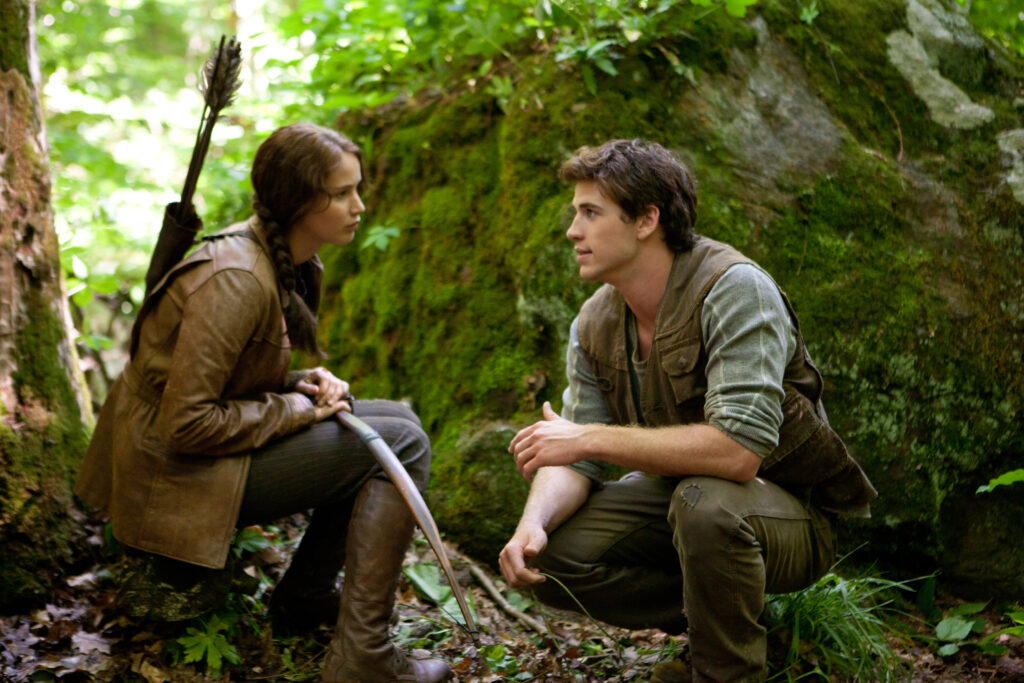
The arena works so well because it creates the illusion of freedom. Katniss can run for miles, yet she never leaves the Gamemakers’ control. Every direction can be blocked. Every source of safety can become a trap. Even the announcement allowing two victors from the same district turns out to be another manipulation.
Its strategic possibilities make it memorable. The Careers control the Cornucopia’s supplies until Katniss helps Rue destroy their stockpile. Rue moves between the trees and communicates through mockingjays. Peeta uses camouflage to hide in plain sight. Each tribute interacts with the environment differently.
More importantly, the arena becomes the birthplace of the rebellion.
Katniss covers Rue’s body with flowers, transforming a death the Capitol planned into a public act of mourning and defiance. District 11 responds. Later, Katniss and Peeta threaten to eat the nightlock berries rather than kill each other, forcing the Gamemakers to accept two victors.
The Capitol built the arena to prove that it controlled every choice. Katniss proved that even inside a manufactured nightmare, it could not completely control what those choices meant.
The 74th Games nearly takes the top position. It is where Katniss loses Rue, saves Peeta and becomes more dangerous to President Snow than she understands. Yet one arena turns the Capitol’s obsession with control into an even more ingenious trap.
Of course, the clock arena takes the top spot.
Created for the Third Quarter Quell in The Hunger Games: Catching Fire, the 75th arena places former victors inside a perfectly engineered tropical environment. A saltwater lake and Cornucopia sit at its center, surrounded by twelve sections of dense jungle. At first, it looks like paradise.
Then the clock starts ticking.
Every hour activates a different horror in one section of the arena. At midnight and noon, lightning strikes a massive tree. A poisonous fog attacks during another hour. Elsewhere, blood rains from the sky, jabberjays imitate the screams of loved ones, carnivorous monkeys swarm the tributes, and a powerful wave crashes through the jungle.
The arena does not merely contain hazards. It follows a schedule.

That makes it the series’ most strategically complex environment. Tributes must recognize the pattern, determine their location, and anticipate what comes next. Wiress’s warning that the arena is a clock unlocks its design.
Its structure forces the victors to rely on one another. Katniss has the bow, Finnick carries the trident, Beetee understands electricity, and Wiress recognizes the pattern. The arena must challenge experienced survivors who have already beaten the Games.
Visually, it is the franchise’s most inventive arena. The Cornucopia acts like the face of a clock, while identical jungle sections confuse anyone who loses track of time. Its beauty hides mechanical precision.
The clock arena also wins because of how the tributes ultimately use its design. Beetee plans to connect his wire to the lightning tree and electrocute the remaining Careers near the water. When the plan begins to collapse, Katniss realizes the real enemy is not another tribute.
It is the arena.
She attaches the wire to an arrow and fires it into the force field as lightning strikes. The resulting explosion destroys the arena’s defenses, ends the Games, and allows the rebels to rescue her.
The 74th arena created the Mockingjay. The 75th arena set her free.
Its visual imagination, structured danger, and revolutionary importance make the clock arena the clear winner. It is the Capitol’s greatest arena and one of its most spectacular failures.
Every arena reflects the Capitol that created it.
The 10th Games reveals a government still learning how to turn punishment into popular entertainment. The 73rd shows how routine that entertainment eventually becomes. The 74th demonstrates the Gamemakers’ power to control an entire environment, while the 75th pushes that control to its most elaborate extreme.
Yet the arenas also reveal the limits of that power.
Lucy Gray survives by refusing to become the character the Capitol expects. Katniss turns Rue’s death into an act of remembrance. Peeta protects his humanity even when the Games reward cruelty. The victors of the Quarter Quell stop playing against one another and begin attacking the system itself.
The Capitol can design the arena. It can create the rules, unleash the mutts, and manufacture the spectacle. What it cannot always control is what happens when the tributes decide there are much worse games to play.
Which Hunger Games arena do you think deserves the top spot, and which one would you have the best chance of surviving?
Sign up for our newsletter to keep up to date with all our screenings.
Four arenas are shown or meaningfully depicted across the five released films. These include the arenas used for the 10th, 73rd, 74th and 75th Hunger Games.
The clock arena from the 75th Hunger Games takes our top spot. Its scheduled dangers, tropical design and strategic complexity make it the franchise’s most inventive arena. It also plays a crucial role in the rebellion when Katniss destroys its force field.
The arena is divided into twelve sections that function like the face of a clock. A different threat activates every hour, including poisonous fog, carnivorous monkeys, blood rain, jabberjays, a massive wave and lightning.
The 74th Hunger Games take place in a forest arena filled with streams, rocky terrain and dense trees. Although it appears natural, the Gamemakers control the environment and unleash dangers such as fire, tracker jackers and muttations.
The 10th Hunger Games take place inside the Capitol Arena, an aging stadium that once hosted sporting and military events. A rebel bombing damages the structure before the Games, creating tunnels, hiding places and piles of rubble that reshape the competition.





"*" indicates required fields

