Before the Weeping Angels: How The Satan Pit Redefined Doctor Who Horror
Written by on Nov 09, 2026 9:55 AM


Written by on Nov 09, 2026 9:55 AM
Before the Weeping Angels warned us not to blink, before the Vashta Nerada made us afraid of the shadows, and before Midnight turned a simple conversation into a nightmare, Doctor Who sent the Tenth Doctor somewhere even he couldn’t explain.
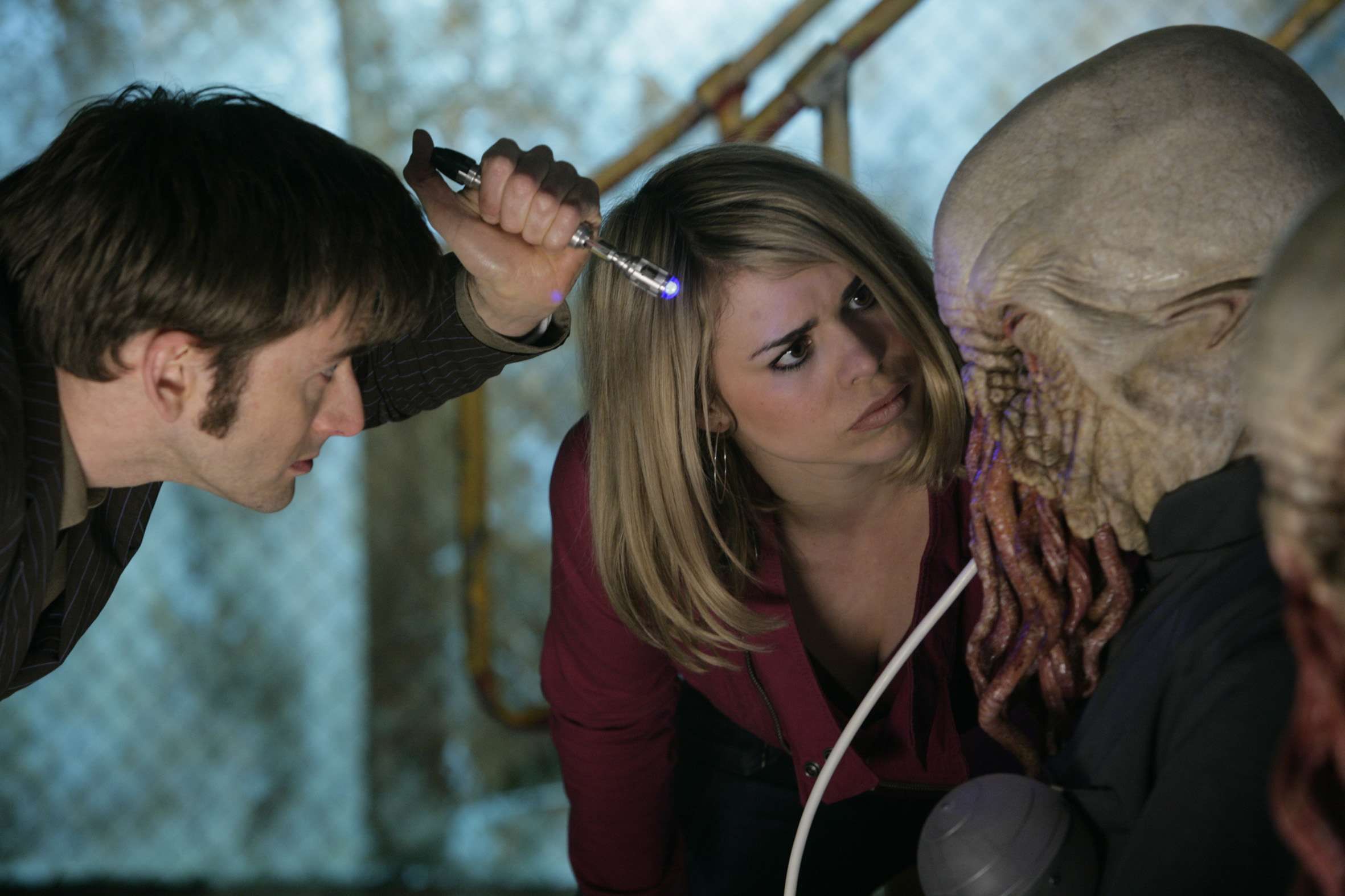
In 2006, David Tennant’s Doctor and Billie Piper’s Rose Tyler landed on a mysterious planet orbiting a black hole. Beneath its surface waited an ancient entity that claimed to predate the universe itself. What began as another adventure quickly became a fight for survival against an enemy that challenged everything the Doctor believed.
The Impossible Planet and The Satan Pit delivered one of the most ambitious stories of the show’s modern revival, blending science fiction, supernatural mystery and psychological suspense into a two-part adventure that still holds up 20 years later.
The Weeping Angels would arrive the following year and become one of Doctor Who’s most recognizable monsters, but the Beast had already demonstrated how frightening the unknown could be.
Before returning to Krop Tor, let’s revisit the characters, creatures, and unforgettable moments that helped make The Satan Pit a defining adventure of the Tenth Doctor era.
Every great Doctor Who adventure begins with a mystery, but few are as impossible as Krop Tor.
The planet sits in orbit around a black hole, held in place by an energy source that defies the laws of physics. Even the Doctor, who has traveled across time and space, cannot explain how it survives.
Naturally, he wants to investigate.
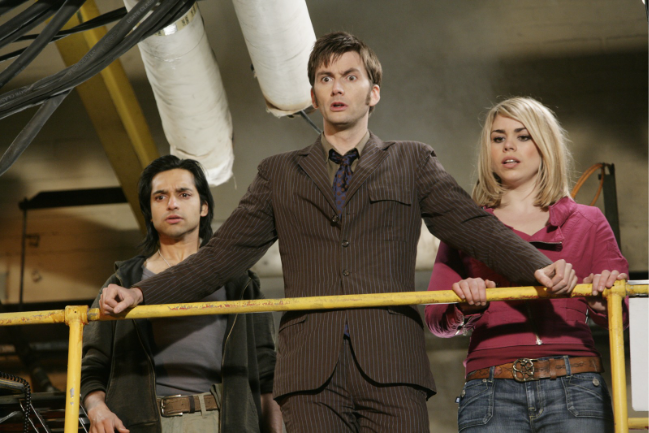
The Doctor and Rose arrive at Sanctuary Base 6, a research station where a small human crew is drilling toward the source of the mysterious energy. Strange symbols cover the walls, an ancient language appears to predate civilization, and the station’s Ood servants begin behaving unusually.
Then the TARDIS falls into the depths of the planet, leaving the Doctor and Rose stranded.
Without their usual escape route, the pair must rely on the crew of Sanctuary Base 6 to uncover what’s happening beneath their feet.
The setting gives the story its identity. The cramped corridors, isolated research station and enormous black hole looming overhead create an atmosphere closer to Alien than a traditional space adventure.
And while the Doctor has faced impossible odds before, this time he has no idea what he’s dealing with.
Few Doctor Who creatures have made an entrance quite like the Ood.
With their pale faces, facial tentacles and translation spheres, the Ood are among the most visually distinctive aliens introduced during the show’s modern revival.
At first, they appear to be peaceful servants assisting the crew of Sanctuary Base 6. Their calm voices and seemingly obedient behavior make them easy to overlook.
That changes when the Beast begins exerting its influence.
The Ood’s eyes glow red, their translation spheres become deadly weapons, and their once-reassuring voices deliver messages from an ancient evil.
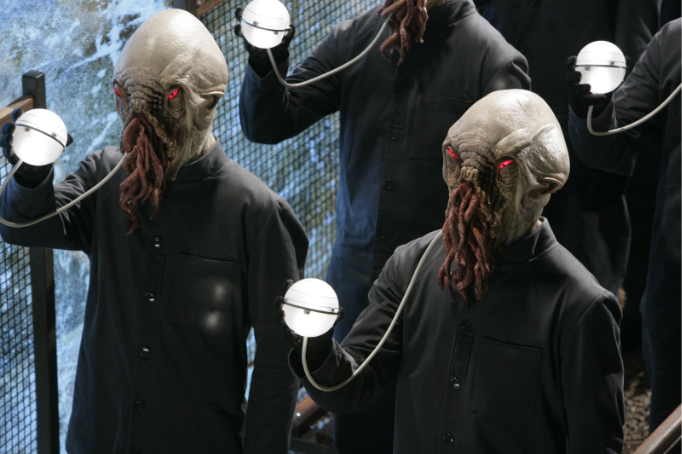
Suddenly, the crew’s most dependable companions become their greatest threat.
What makes the Ood so effective is the contrast between their appearance and behavior. Their movements remain deliberate, their voices stay eerily composed, and their collective presence makes every encounter increasingly dangerous.
The Ood would eventually return in episodes like Planet of the Ood and The End of Time, where audiences learned more about their history, intelligence and mistreatment.
But their introduction in The Impossible Planet remains one of the franchise’s most memorable creature debuts.
The Doctor has faced his share of powerful enemies.
The Daleks want extermination. The Cybermen seek conversion. The Master usually has another elaborate plan to conquer the universe.
The Beast? It claims to have existed before the universe began.
Imprisoned deep beneath Krop Tor, the mysterious entity identifies itself as an ancient evil, one whose origins extend beyond recorded history and perhaps even time itself.
For a character who can usually explain the impossible through science, the Beast presents a unique problem.
Is it really the Devil? An alien so ancient that countless civilizations built their mythology around it? Or something beyond the Doctor’s understanding?
The story never provides a definitive answer.
Instead, it allows the mystery to unfold through the Beast’s influence over the station and its inhabitants.
Much of that power comes from Gabriel Woolf’s commanding vocal performance. Longtime Whovians may recognize Woolf as the voice of Sutekh in the classic 1975 serial Pyramids of Mars, another adventure involving an ancient, seemingly unstoppable evil.
As the Beast, Woolf delivers every line with an unsettling certainty. The creature knows the crew’s secrets, exploits their fears and speaks as though the universe itself is beneath it.
Unlike the Doctor’s more familiar enemies, the Beast doesn’t need an army or a spaceship to establish its power.
Sometimes, a voice is enough.
When fans discuss the scariest episodes of modern Doctor Who, Blink often dominates the conversation.
And for good reason.
The 2007 episode introduced the Weeping Angels, creatures that move only when nobody is looking at them. It transformed ordinary statues into something audiences would never see quite the same way again.
But one year earlier, The Impossible Planet and The Satan Pit had already explored a different kind of fear.
Instead of a monster pursuing its victims, the story focuses on an enemy capable of manipulating them from within.
Archaeologist Toby Zed becomes possessed by the Beast, with strange markings spreading across his body as his personality changes. The Ood turn against the crew, and even the station’s communication systems become tools for an unseen presence.
The characters can’t always tell who or what to trust.
That approach would become a recurring strength of the revived series.
In Silence in the Library and Forest of the Dead, the Vashta Nerada transformed shadows into deadly hiding places. In Midnight, an unseen entity exploited the fear and suspicion of a group of stranded travelers, turning them against one another.
Each adventure found a new way to challenge the Doctor without relying entirely on physical confrontation.
The Satan Pit helped establish that creative direction by placing an unknowable threat at the center of its story.
And unlike many of the Doctor’s enemies, the Beast leaves behind more questions than answers.
One of the most compelling aspects of David Tennant’s Tenth Doctor is his confidence.
He’s energetic, endlessly curious and usually several steps ahead of everyone around him. Whether he’s confronting a Dalek or unraveling a centuries-old mystery, he approaches danger with intelligence, humor and an unwavering belief that there’s always a solution.
The Beast challenges that confidence.
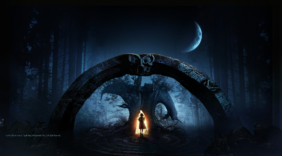
Deep beneath the planet’s surface, the Doctor discovers an enormous creature imprisoned in a cavern, chained to a civilization’s ancient machinery.
The revelation raises a question that cuts to the heart of the character.
What happens when the Doctor encounters something that science cannot explain?
Throughout the adventure, he struggles with the possibility that the Beast existed before time, before matter and before the universe as he understands it.
For someone who has dedicated his life to exploration and discovery, that’s a difficult idea to accept.
Yet the Doctor doesn’t need to understand every detail to recognize the danger.
He must decide whether to trust his instincts and take an extraordinary risk, even without knowing the full truth about his enemy.
It’s a defining Tenth Doctor moment, balancing the character’s intellectual curiosity with the courage that makes him a hero.
While the Doctor explores the depths of Krop Tor, Rose faces an increasingly desperate situation aboard Sanctuary Base 6.
With the TARDIS gone and the Beast’s influence spreading, the surviving crew must find a way to escape before the planet falls into the black hole.
Rose refuses to accept defeat.
Rather than waiting for the Doctor to return, she challenges the crew, helps organize their survival and demonstrates the determination that made her such an important part of the show’s revival.

Her role also highlights one of the defining strengths of the Tennant and Piper partnership.
The Doctor and Rose share an adventurous spirit, but their relationship is built on something deeper than their excitement for exploring the universe.
They trust each other.
Even when separated by impossible distances, that trust influences the decisions they make.
Their connection gives the story an emotional center, reminding audiences that the greatest stakes in Doctor Who aren’t always the fate of the universe.
Sometimes, they’re about getting the people you love home safely.
When The Impossible Planet and The Satan Pit originally aired in June 2006, the revived Doctor Who was still establishing its identity.
Christopher Eccleston had helped introduce the Doctor to a new generation, and David Tennant was finding his footing as the Tenth Doctor during his first full season.
This two-part adventure demonstrated just how much creative ground the series could cover.
Its ambitious setting, distinctive creatures and philosophical questions helped distinguish it from more conventional monster-of-the-week stories.
The Ood became recurring characters in the franchise, the Beast earned a place among the Doctor’s most memorable adversaries, and the adventure showed how effectively the series could balance suspense with humor, emotion and wonder.
Twenty years later, its central mystery remains just as intriguing.
The Doctor has encountered countless extraordinary beings since his journey to Krop Tor, but few have challenged his understanding of existence quite like the Beast.
And while the Weeping Angels would eventually become synonymous with Doctor Who horror, The Satan Pit deserves its place alongside the franchise’s most celebrated adventures.
After all, before Whovians were afraid to blink, they were listening for a voice beneath the planet.
Sign up for our newsletter to keep up to date with all our screenings.



"*" indicates required fields

