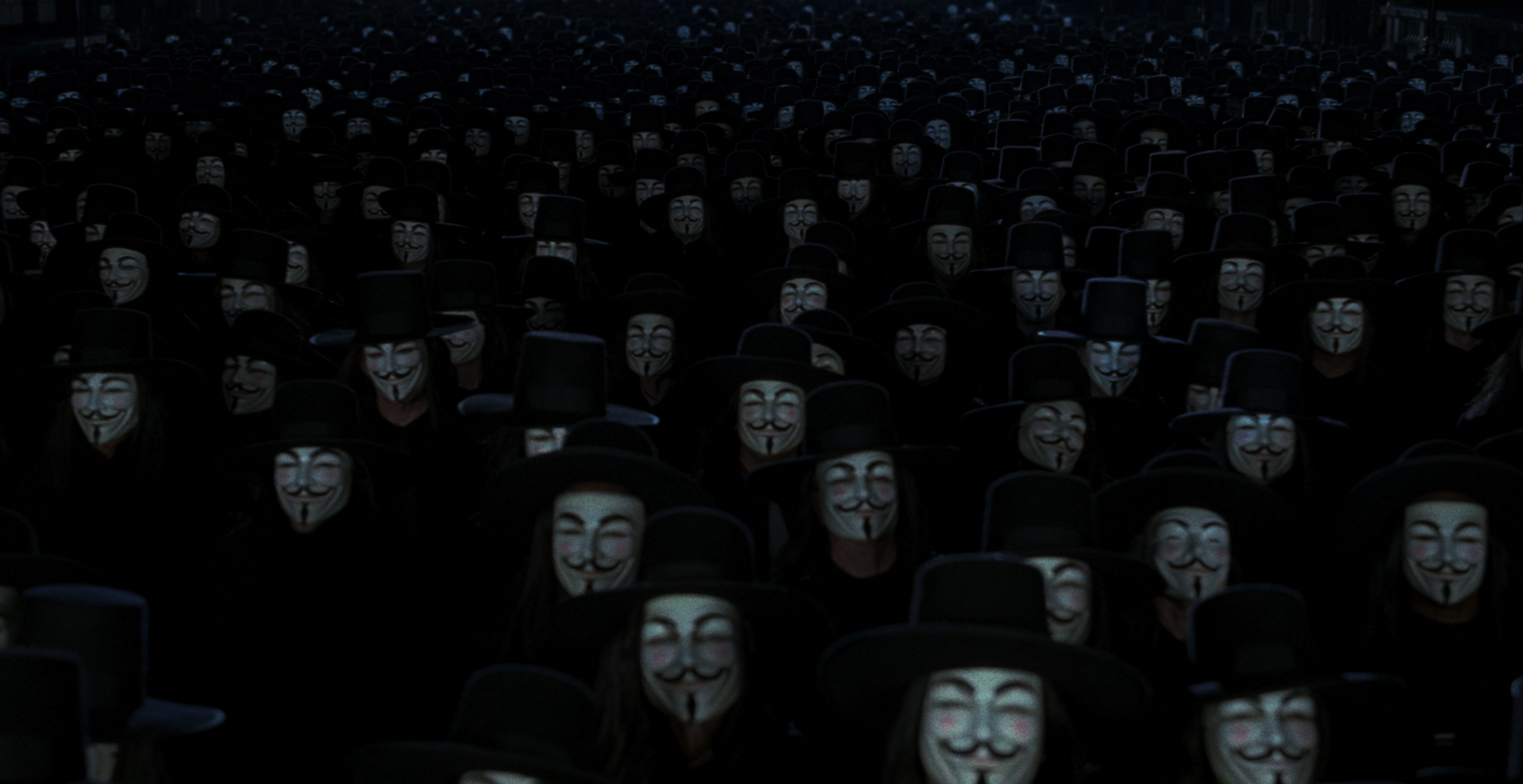
The Making of V for Vendetta How a Graphic Novel Became a Cult Classic
Written by on Oct 09, 2026 5:00 PM


Written by on Oct 09, 2026 5:00 PM
Remember, remember.
Twenty years ago, a mysterious figure stepped out of the shadows wearing a black cloak, a wide-brimmed hat and an unforgettable smiling mask.
His name was V.
When V for Vendetta arrived in theatres in 2006, audiences were introduced to a dystopian vision of Britain ruled by fear, surveillance and an authoritarian government. At its center was V, a masked revolutionary with a flair for theatrics, a love of literature and classical music, and an elaborate plan to inspire a nation.
But V’s story began long before Hugo Weaving put on the mask.
The journey of V for Vendetta stretches back more than four decades, beginning with the groundbreaking work of writer Alan Moore and artist David Lloyd before eventually reaching filmmakers Lana and Lilly Wachowski and director James McTeigue.
Twenty years after the film first hit the big screen, it’s worth going back to where it all began and exploring how a British comic became one of the most recognizable dystopian films of the 21st century.
The story began in 1982.
Written by Alan Moore and illustrated primarily by David Lloyd, V for Vendetta was originally serialized in the British anthology magazine Warrior. The story imagined a bleak future Britain controlled by a totalitarian government and introduced readers to two characters whose lives would become intertwined: Evey Hammond and the mysterious revolutionary known only as V.
Visually, V was impossible to forget.
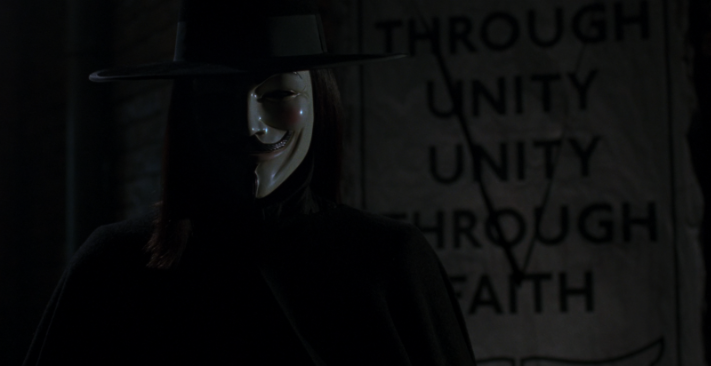
Dressed almost entirely in black and concealing his identity behind a stylized Guy Fawkes mask, V looked less like a traditional comic book hero and more like a figure who had stepped out of history.
That was intentional.
Guy Fawkes was part of the Gunpowder Plot of 1605, an unsuccessful attempt by a group of English Catholics to blow up the Houses of Parliament and kill King James I. The plot was discovered on November 5, a date still commemorated in Britain centuries later.
Moore and Lloyd transformed that historical imagery into something new.
Their V wasn’t simply a man behind a mask. He was an idea.
The original V for Vendetta stories ran in Warrior from 1982 until the magazine ceased publication in 1985, leaving the story unfinished. DC Comics later brought the series to American readers, publishing the story in color and allowing Moore and Lloyd to complete it in 1989.
From there, V for Vendetta found generations of new readers.
And eventually, Hollywood came calling.
Before The Matrix made them household names among science-fiction fans, Lana and Lilly Wachowski had already taken an interest in bringing V for Vendetta to the screen.
Adapting the graphic novel presented an enormous challenge.
This wasn’t a traditional superhero story.
There were no secret identities waiting to be dramatically revealed. V’s face remains hidden. The story is filled with political philosophy, literary references, morally complicated characters and questions about the relationship between citizens and governments.
The Wachowskis’ screenplay reworked elements of the graphic novel while maintaining its central characters, imagery and dystopian setting.
At the center remained Evey Hammond, played in the film by Natalie Portman.
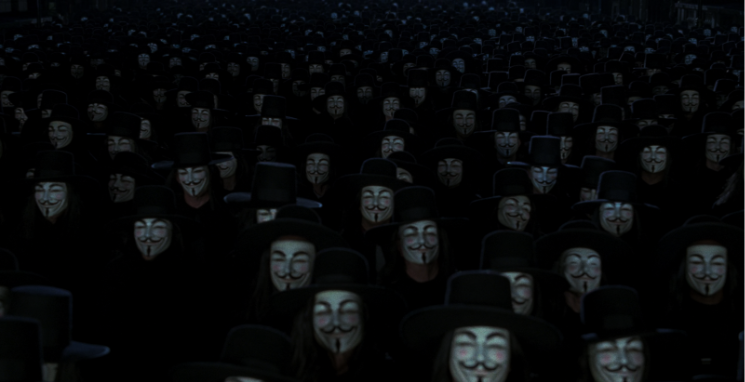
Evey begins the movie as someone trying to survive inside the system around her. Her encounter with V pulls her into something much larger, forcing her to confront fear, identity and what freedom actually means to her.
Director James McTeigue later explained that the filmmakers deliberately gave the cinematic Evey more agency, allowing her to stand more firmly as her own character rather than simply being shaped by V.
That relationship became the emotional backbone of the movie.
V for Vendetta marked James McTeigue’s feature directorial debut, but he was hardly new to ambitious filmmaking.
McTeigue had previously worked as a first assistant director on the Matrix films, giving him an established creative relationship with the Wachowskis before stepping into the director’s chair.
Together, the filmmakers had to create a world that felt heightened without becoming completely removed from reality.
Their Britain is recognizable, but something is deeply wrong.
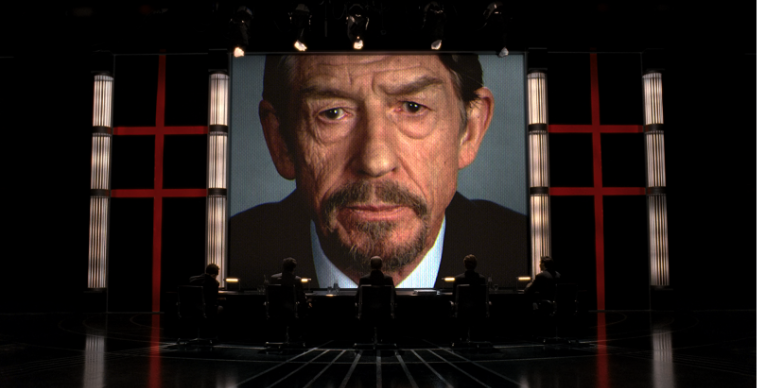
Government-controlled television fills homes. Curfews control the streets. Surveillance reaches seemingly everywhere. Giant screens project the image of Chancellor Adam Sutler, played by John Hurt, as the government attempts to maintain control through fear.
Against that cold, controlled world stands V.
And making him work on screen required an unusual performance.
Most actors rely heavily on facial expressions.
Hugo Weaving didn’t have that luxury.
For essentially the entire movie, V’s face remains hidden behind the same Guy Fawkes mask. Its expression doesn’t change. It can’t smile, frown or react.
Everything had to come from Weaving.
His voice.
His posture.
The tilt of his head.
The movement of his hands.
The theatrical way he moves through a room.
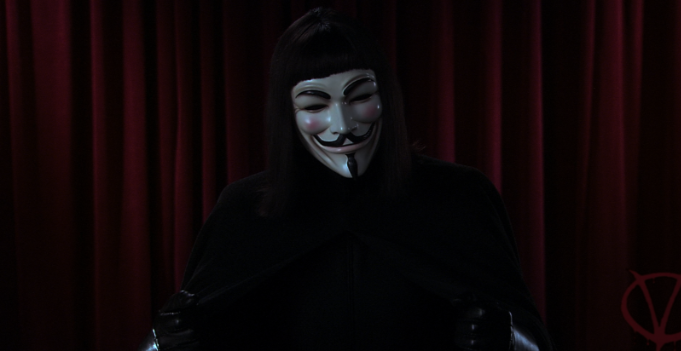
McTeigue described the design as having both an organic and otherworldly quality, blending elements of a harlequin with the recognizable Guy Fawkes image.
Weaving then had to make that unchanging face feel alive.
The result is one of the film’s defining achievements. Depending on the scene, that same smiling mask can appear playful, intimidating, sorrowful or furious without physically changing at all.
Even Natalie Portman praised Weaving’s ability to communicate through his voice and physical performance despite having his face completely concealed.
It makes V feel less like a conventional protagonist and more like the idea the story wants him to become.
If V is the film’s symbol, Evey is its emotional center.
Natalie Portman takes Evey through one of the movie’s most dramatic transformations.
At the beginning, she is frightened by the world around her. She understands the danger of stepping outside the boundaries established by the government and has learned to survive by keeping her head down.
Meeting V changes everything.
Evey is forced to confront the history of the society she lives in, the trauma in her own past and eventually her deepest fears.
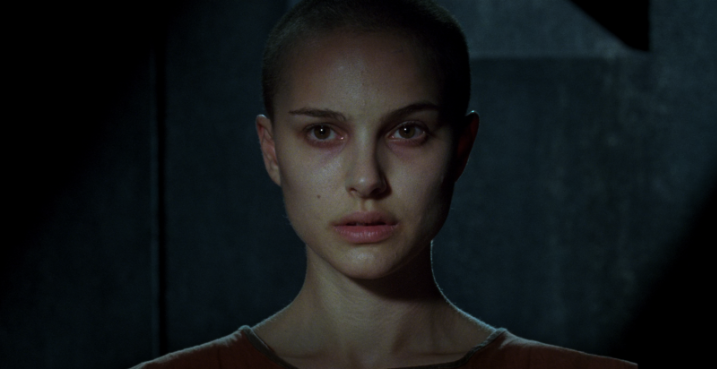
That transformation is reflected physically in one of the film’s most recognizable images: Evey’s shaved head.
By the time she emerges into the rain with her arms raised toward the sky, she is no longer the same person audiences met at the beginning of the film.
V may be planning a revolution across Britain.
Evey is experiencing one within herself.
The world surrounding V and Evey was just as important as the characters themselves.
Production designer Owen Paterson and cinematographer Adrian Biddle helped create a Britain that could feel grand and oppressive at the same time. The film was shot in locations including London and Berlin, blending real architecture with constructed environments to create its near-future world.
Then there is the Shadow Gallery.
V’s underground home feels almost like the opposite of the world above it.
While the government attempts to control information and culture, V surrounds himself with books, paintings, music, movies and artifacts. The space is filled with pieces of culture that have survived beyond the reach of the government.
It isn’t simply V’s headquarters.
It tells us who he is.
Sign up for our newsletter to keep up to date with all our screenings.



"*" indicates required fields

