The Ultimate Underdog: 50 Years of Rocky
Written by on Oct 23, 2026 5:00 PM


Written by on Oct 23, 2026 5:00 PM
In 1976, audiences met a small-time Philadelphia boxer with a big heart, a battered face, and an impossible dream. His name was Rocky Balboa, and he was about to become one of the most beloved characters in movie history.
Fifty years later, the Italian Stallion is still going the distance.
Written by and starring Sylvester Stallone, Rocky became a cultural phenomenon, earning 10 Academy Award® nominations and three wins, and launching a franchise that would span generations. But behind the boxing gloves, training montages, and unforgettable theme music was something audiences could connect with: an ordinary man looking for his shot at something extraordinary.
As Rocky celebrates its 50th anniversary, we’re looking back at the unlikely Hollywood success story, the moments that made it a classic, and how the upcoming film I Play Rocky brings the legend full circle.
Before Rocky Balboa became a household name, he was just another struggling fighter trying to make ends meet on the streets of Philadelphia.
Working as a debt collector for a local loan shark and boxing in small clubs for modest paydays, Rocky isn’t exactly championship material. He’s awkward, unpolished, and seemingly destined for a life of missed opportunities.
Then Apollo Creed comes calling.
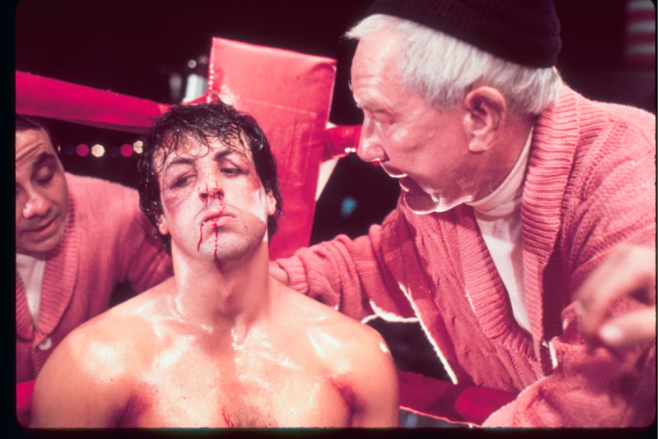
When the reigning heavyweight champion needs an opponent for a highly publicized Bicentennial boxing match, he chooses Rocky as a publicity stunt. After all, what better way to celebrate the American dream than giving an unknown fighter a shot at the title?
For Apollo, it’s entertainment. For Rocky, it’s everything.
But here’s what separates Rocky from countless sports movies that followed: Rocky doesn’t need to win.
He knows Apollo is the better fighter. His goal isn’t to become heavyweight champion of the world. He just wants to prove he belongs.
That motivation transforms Rocky from a boxing movie into something universal. Everyone knows what it feels like to be underestimated, to face seemingly impossible odds, or to wonder whether they’re capable of something greater.
And as it turns out, the man who created Rocky Balboa knew those feelings better than most.
Long before becoming one of Hollywood’s biggest action stars, Sylvester Stallone was a struggling actor searching for his breakthrough.
Inspired in part by the 1975 heavyweight fight between Muhammad Ali and Chuck Wepner, Stallone developed the screenplay for Rocky, a story about an overlooked fighter receiving an unexpected opportunity.
Hollywood saw potential in the script. There was just one problem.
Stallone wanted to play Rocky himself.
Producers were interested in the screenplay, but the relatively unknown actor wasn’t their first choice for the leading role. Rather than surrender his character, Stallone held firm.
Eventually, producers Irwin Winkler and Robert Chartoff backed the project with Stallone in the lead, and director John G. Avildsen brought the story to the screen on a budget of approximately $1 million.
Released in November 1976, Rocky became a box office sensation and earned 10 Academy Award® nominations. It ultimately won three, including Best Picture, Best Director, and Best Film Editing.
Stallone’s determination had paid off, and his journey from struggling actor to Hollywood star closely mirrored the character he created.
For a movie famous for its punches, some of Rocky’s greatest moments are surprisingly quiet.
Take Adrian Pennino.
Played by Talia Shire, Adrian is shy, reserved, and seemingly as uncertain about her place in the world as Rocky is about his. Their relationship develops through awkward conversations, quiet moments, and a memorable first date at an ice-skating rink.
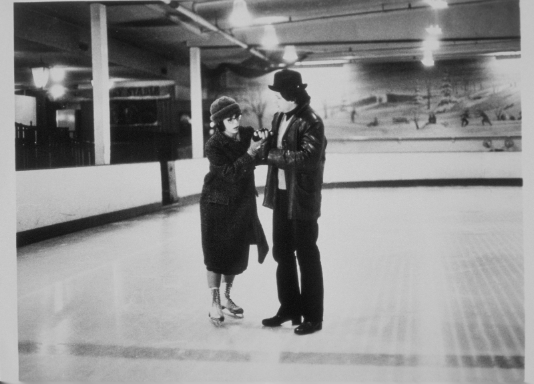
There’s nothing particularly glamorous about their romance, and that’s precisely why it works.
Rocky and Adrian are two people accustomed to being overlooked. Together, they discover what it feels like to have someone in their corner.
Then there’s Mickey Goldmill.
Burgess Meredith’s unforgettable performance as Rocky’s gruff trainer adds another layer to the story. Mickey recognizes Rocky’s wasted potential, but their relationship is complicated by years of disappointment and missed opportunities.
When Mickey finally offers to train him, the two begin an unlikely partnership built on frustration, determination, and mutual respect. Even Paulie, Adrian’s troubled brother played by Burt Young, contributes to the film’s imperfect humanity.
These characters aren’t superheroes. They’re flawed people searching for purpose, connection, and a little dignity. By the time Rocky begins preparing for the biggest fight of his life, audiences aren’t simply hoping for an upset. They’re invested in the people who helped get him there.
And that’s what makes the film’s most famous training sequence so satisfying.
You know the music. You know the gray sweatsuit. And you definitely know the stairs.
Few sequences in cinema are as instantly recognizable as Rocky Balboa’s legendary training montage. Set to Bill Conti’s triumphant “Gonna Fly Now,” the sequence follows Rocky as he transforms from an unpolished club fighter into a legitimate contender.
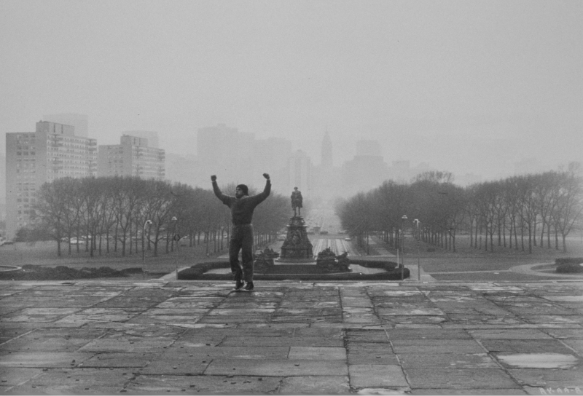
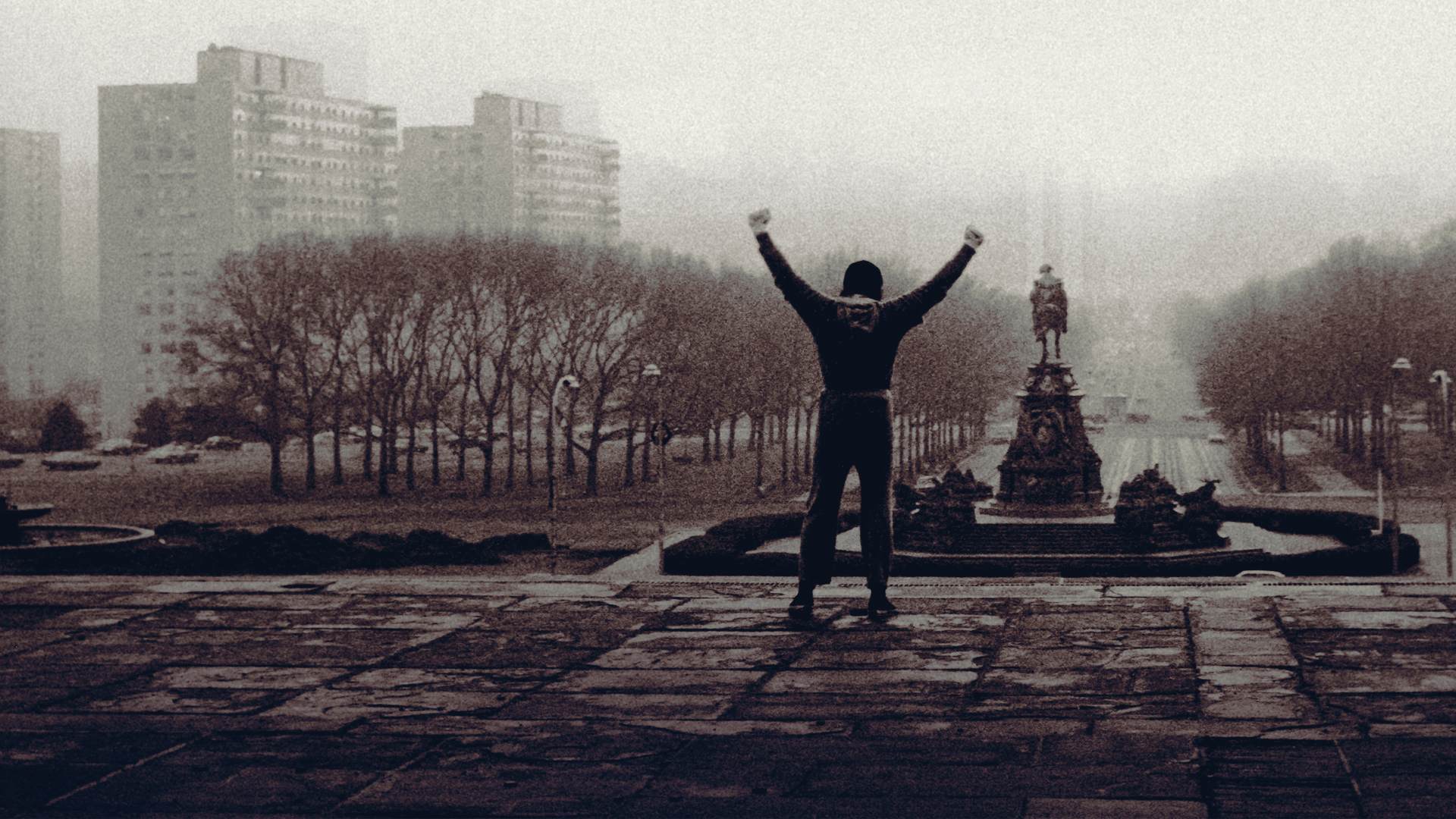
He runs through Philadelphia’s streets, pounds away at a heavy bag, practices his footwork, and famously charges up the steps of the Philadelphia Museum of Art.
At the top, he throws his arms into the air. It’s a moment that has transcended the movie itself.
The Rocky Steps remain one of Philadelphia’s most recognizable landmarks, attracting visitors eager to recreate the Italian Stallion’s triumphant pose. But the montage is more than a collection of workouts set to an unforgettable soundtrack.
Each early morning run and exhausting training session brings Rocky closer to a goal that once seemed completely out of reach. By the time he steps into the ring with Apollo Creed, the audience has witnessed every bit of work it took to get there.
Now comes the real test.
Everything in the film builds toward one unforgettable night.
Rocky Balboa versus Apollo Creed.
The unknown challenger against the undefeated heavyweight champion.
What begins as an elaborate publicity stunt quickly becomes something neither fighter anticipated. Rocky refuses to stay down, while Apollo discovers that his supposedly easy opponent is far more determined than anyone expected.
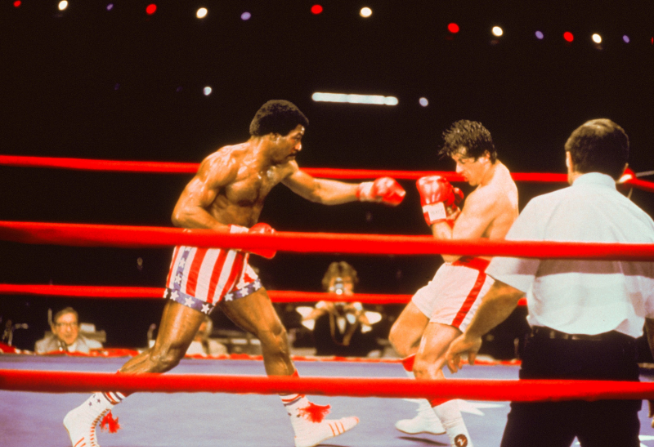
As the rounds progress, both men push themselves beyond their limits. The punches become heavier, exhaustion becomes impossible to hide, and the championship fight turns into a test of sheer endurance.
Then comes the ending.
Apollo wins by split decision.
Rocky loses the fight.
And somehow, it feels like the greatest victory imaginable.
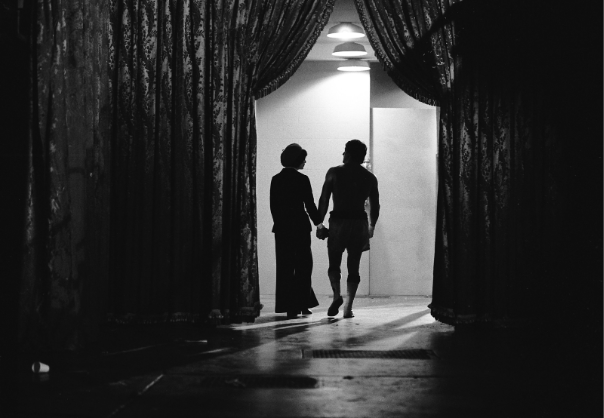
Rather than obsessing over the judges’ decision, Rocky desperately searches the crowd for Adrian. When they finally find each other, the championship belt no longer matters.
He went the distance. He accomplished what he set out to do.
It’s an ending that challenged the traditional sports movie formula and helped establish Rocky as something special.
Audiences didn’t need to see Rocky win the title to celebrate his achievement. They had already watched him accomplish something nobody thought possible.
That unconventional victory became the foundation for a legacy that would extend far beyond 1976.
What began as a modest boxing drama evolved into one of Hollywood’s most recognizable franchises.
The original film inspired five direct sequels, following Rocky through championship victories, devastating losses, personal tragedies, and unexpected comebacks.
Decades later, the Creed films introduced the franchise to a new generation, with Michael B. Jordan portraying Adonis Creed, the son of Rocky’s legendary rival and friend Apollo Creed.
Rocky’s influence also extends beyond the franchise. From inspirational sports dramas to training montages and underdog narratives, countless films have drawn inspiration from the storytelling that made the original so effective.
Yet despite everything that followed, the first Rocky remains remarkably grounded.
Before the international rivalries, larger-than-life opponents, and championship rematches, there was simply a man trying to make something of himself. It’s a story that still resonates half a century later. And now, Hollywood is turning its attention to the equally remarkable journey of how that story reached the screen.
50 years after Rocky first entered the ring, another underdog story is preparing for its own theatrical moment.
This time, the spotlight turns toward the man who created Rocky Balboa.
I Play Rocky, directed by Academy Award winner Peter Farrelly, explores the true story of Sylvester Stallone’s fight to bring his screenplay to the big screen.
Anthony Ippolito stars as a young Stallone, portraying the struggling actor who refuses to give up his dream of playing the character he created.
The film also features Matt Dillon, AnnaSophia Robb, Stephan James, Toby Kebbell, P.J. Byrne, and Jay Duplass.
Rather than revisiting Rocky Balboa’s fictional journey, I Play Rocky takes audiences behind the scenes of the original film’s creation, exploring the rejection, uncertainty, and persistence that helped turn a struggling actor’s screenplay into an Academy Award-winning classic.
Five decades, six films, and an entirely new generation of Creed fans later, the original still packs an emotional punch. Its characters feel human, its triumphs feel earned, and its unforgettable finale reminds audiences why they fell in love with Rocky Balboa in the first place.
Now, the Italian Stallion is returning to where his legend began.
Sign up for our newsletter to keep up to date with all our screenings.

"*" indicates required fields

