A Cabinet of Monsters: The Creatures of Guillermo del Toro
Written by on Sep 25, 2026 5:00 PM


Written by on Sep 25, 2026 5:00 PM
If Guillermo del Toro opens a door and tells you there’s something interesting on the other side, you should probably prepare yourself.
It could be a towering Faun waiting at the bottom of an ancient labyrinth. A ghost crawling through the halls of a crumbling mansion. A gigantic Kaiju rising from the Pacific. Or maybe a pale, eyeless creature sitting suspiciously still at the end of a dinner table.
For decades, del Toro has built one of cinema’s greatest cabinets of curiosities.
His films are filled with monsters, ghosts, demons and creatures that feel like they escaped from fairy tales we were definitely too young to read. But what makes a Guillermo del Toro monster unforgettable isn’t simply how frightening it looks.
His monsters can be beautiful. They can be tragic. They can fall in love. Sometimes they are more human than the people hunting them.
And sometimes they have eyes in their hands.
With Pan’s Labyrinth bringing audiences back into one of del Toro’s most extraordinary worlds, we’re opening the cabinet and looking at the creatures that have made his movies beautiful, terrifying and impossible to forget.
Welcome to the labyrinth.
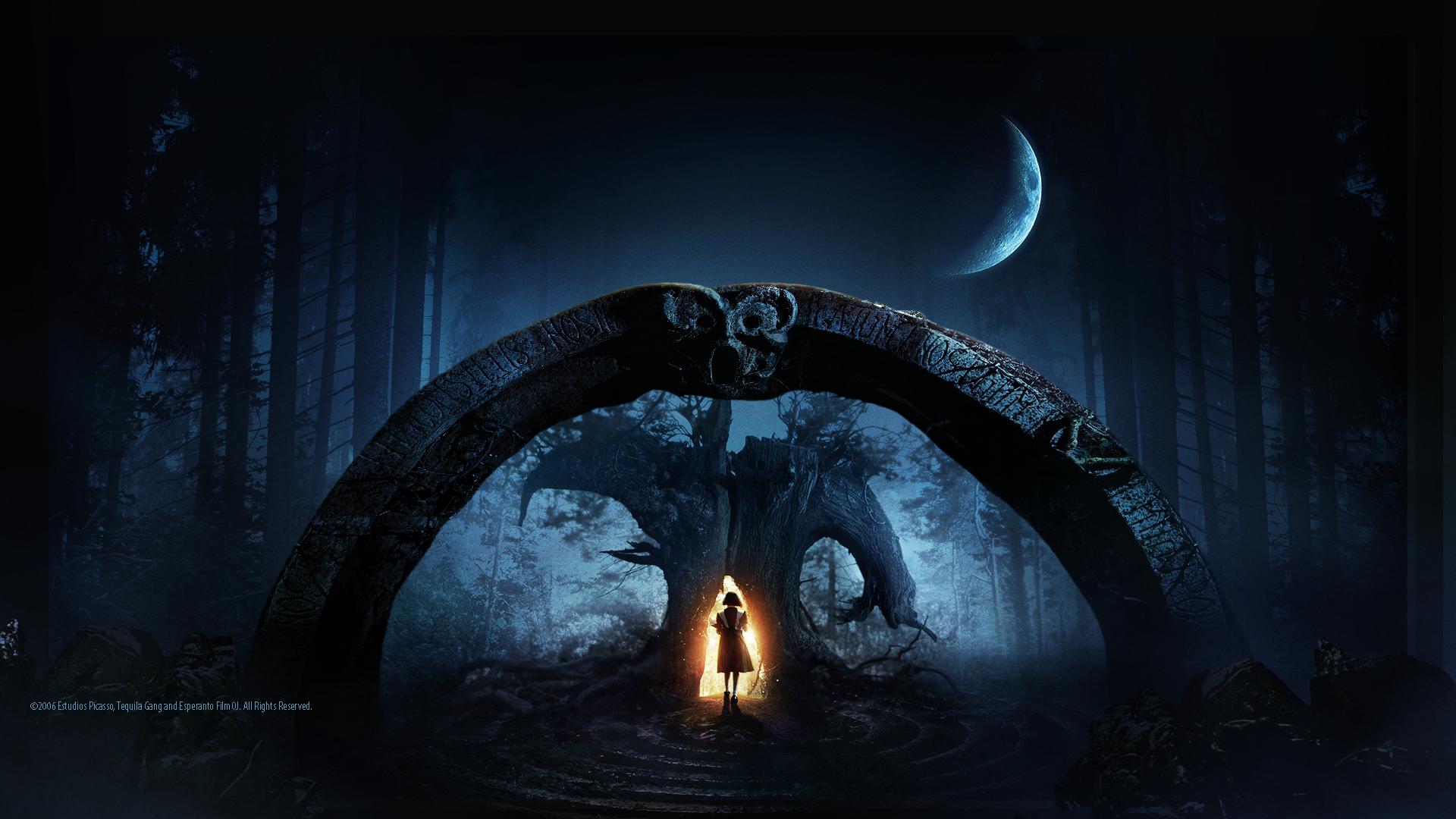
When Ofelia first descends into the ancient stone maze near her new home, she doesn’t find a handsome prince or a friendly wizard waiting for her.
She finds the Faun.
Towering above her with curling horns, weathered skin and a body that seems partially made from the forest itself, the Faun looks like he has been waiting underground for centuries.
Maybe he has.
He tells Ofelia that she is actually Princess Moanna, the long-lost daughter of the king of the underworld. If she can complete three tasks before the full moon, she can return to her true home.
Simple enough.
Except this is Guillermo del Toro.
From the moment we meet him, there is something strange about the Faun. He can be playful and encouraging, but he can also become intimidating. He offers Ofelia an escape from the horrors of the real world, yet we are never entirely sure whether she should trust him.
That uncertainty makes him one of del Toro’s most fascinating creations.
Brought to life through incredible practical effects and Doug Jones’ physical performance, the Faun doesn’t feel like a CGI creation dropped into Ofelia’s world. He feels ancient, physical and real.
More importantly, he isn’t simply good or evil.
He is something older.
And like the labyrinth itself, he invites Ofelia to keep going deeper.
Okay, Ofelia. One rule. Do. Not. Eat. Anything. What could possibly go wrong?
The Pale Man sequence is one of those movie moments that permanently attaches itself to your brain.
Ofelia enters a grand dining hall and discovers an enormous feast stretching across the table. Sitting motionless at the head of it is a pale humanoid creature with sagging skin and no eyes in its face.
Those are sitting on a plate.
That should probably be enough information to leave immediately.
Instead, temptation wins.
The Pale Man awakens, places his eyes into the palms of his hands and begins hunting Ofelia through the room.
Nearly two decades later, the image remains one of the most recognizable in del Toro’s filmography.
But like so many of his monsters, the Pale Man isn’t scary simply because he looks horrifying.
Everything surrounding him tells a story.
The extravagant feast. The piles of food he refuses to share. The murals depicting his brutality. The temptation placed directly in front of a hungry child.
Del Toro turns a monster encounter into something that feels like an ancient warning passed down through generations.
And yet, even with all that symbolism, sometimes the simplest explanation works best.
A monster with eyeballs in his hands is terrifying.
Only Guillermo del Toro could cover a skeletal monster in dozens of eyes and somehow make it beautiful.
The Angel of Death appears in Hellboy II: The Golden Army with an enormous skeletal body, dark feathers and wings lined with eyes.
It should be pure nightmare fuel.
Instead, it’s magnificent.
The Angel represents one of the most important ideas running through del Toro’s work: beauty and horror don’t have to be opposites.
His creatures often live somewhere between the two.
The Angel of Death feels frightening, ancient, majestic and strangely peaceful all at once. It doesn’t look like something that belongs to our world because it doesn’t.
It feels like something humans were never supposed to see.
Which, naturally, makes it impossible to look away.
What happens when the monster gets the love story?
You get The Shape of Water.
At first glance, the Amphibian Man seems like the kind of creature audiences have been trained to fear. He’s an unknown aquatic humanoid being held inside a secret government laboratory.
Then del Toro flips the story.
The creature isn’t the threat.
He’s the prisoner.
Elisa gradually begins communicating with him through sign language, music, food and simple acts of kindness. What initially appears strange and frightening becomes curious, gentle and deeply emotional.
Doug Jones once again disappears inside one of del Toro’s creations, turning the Amphibian Man into a character who can communicate without conventional dialogue.
It also represents one of the purest examples of del Toro’s love for monsters.
Instead of asking what would happen if humanity defeated the creature, The Shape of Water asks something completely different.
What if someone loved him?
Some houses have bad plumbing.
Allerdale Hall has blood-red clay oozing through the walls and ghosts crawling out of the floor.
We’ll take the plumbing.
Crimson Peak gave del Toro the perfect playground for his gothic imagination. Its ghosts are skeletal, decaying figures that appear throughout the enormous mansion, sometimes emerging as if the house itself is trying to push them back into the world.
They’re horrifying.
But there’s a catch.
They may not actually be the things you should fear.
The ghosts of Crimson Peak aren’t simply waiting around corners for a jump scare. They have stories. They suffered. They are trying to communicate with the living.
In another filmmaker’s hands, they might simply be monsters.
For del Toro, they are victims.
And once again, the frightening-looking creature may be trying to save you from something much worse.
Eventually, the cabinet of curiosities got too crowded.
So del Toro made the monsters 300 feet tall.
Pacific Rim takes his lifelong fascination with creatures and turns the dial all the way up. Instead of discovering something hiding beneath a bed or inside a labyrinth, humanity watches gigantic Kaiju rise from the ocean.
Fortunately, humanity also built gigantic robots.
You know where this is going.
The Kaiju draw from generations of monster movies while carrying del Toro’s unmistakable love for creature design. Each has its own silhouette, anatomy and movement.
Some fly.
Some crawl.
Some glow.
All of them are having a very bad effect on coastal real estate.
But beneath the blockbuster spectacle is the same attention to detail found in del Toro’s smaller creatures.
These monsters feel like living things rather than generic obstacles. Their bodies suggest that an entire biological world exists beyond the edges of the movie.
And yes, sometimes it’s also just incredibly fun watching a giant robot punch a giant monster.
Remember leaving a tooth under your pillow and hoping the Tooth Fairy would visit?
Guillermo del Toro remembers things differently.
The Tooth Fairies of Hellboy II are tiny winged creatures with enormous mouths and an appetite that extends far beyond baby teeth.
They’re disgusting.
They’re weirdly adorable.
And we absolutely do not want one anywhere near our pillows.
The creatures perfectly capture del Toro’s ability to take familiar folklore and twist it just enough to make it feel new.
His fantasy worlds aren’t places where magic automatically means something wonderful.
Sometimes magic has a lot of teeth.
Before the Faun led us into the labyrinth, del Toro was already finding new ways to make monsters deeply uncomfortable to look at.
Enter the Reapers.
Blade II introduces a mutated strain of vampires that initially look relatively human.
Then they open their mouths.
And keep opening them.
Their jaws split apart to reveal a horrifying feeding mechanism underneath, creating one of the movie’s most memorable visual effects.
The Reapers showcase something del Toro does exceptionally well: making creature anatomy part of the horror.
His monsters don’t simply look cool.
You understand how they move.
How they eat.
How they survive.
Even when the answer is something you really wish you didn’t know.
Open Guillermo del Toro’s cinematic cabinet of curiosities and no two shelves look quite the same.
There’s the mysterious Faun.
The horrifying Pale Man.
The majestic Angel of Death.
The romantic Amphibian Man.
The tragic ghosts of Crimson Peak.
The colossal Kaiju.
The very hungry Tooth Fairies.
And plenty of other things we would prefer not to meet after dark.
Yet the best del Toro monsters share something deeper.
They’re characters.
They have histories, personalities and rules. Their bodies tell stories about the worlds they inhabit. Some frighten us. Others earn our sympathy. The very best somehow manage to do both.
Because del Toro has never seemed particularly interested in telling us that ugly things are evil and beautiful things are good.
His movies know better.
Sign up for our newsletter to keep up to date with all our screenings.




"*" indicates required fields

