Moments That Made Movie History: Inside Fathom’s Big Screen Classics 2026
Written by on Feb 13, 2026 12:00 PM


Written by on Feb 13, 2026 12:00 PM
Cinema is often defined through moments rather than entire narratives. Certain scenes persist in cultural memory because they distill a film’s themes, craft, and emotional force into a single image or exchange. These moments reward repeated viewing, not only for their immediate impact but for the way they reveal how filmmakers use performance, composition, sound, and editing to shape meaning.
While this year’s series spans decades, genres, and styles, they share a commitment to storytelling through decisive cinematic language. An epic spectacle appears alongside psychological tension, while comedy and romance stand alongside noir and science fiction. A chariot race communicates ambition through scale and movement. A quiet act of loyalty redefines courage through restraint. A line of dialogue or a single prop becomes a key to understanding character, memory, or desire. Each film offers moments that serve as turning points, not only within its narrative but also within the broader history of American cinema.
With Fathom’s Big Screen Classics 2026 featuring some of the most memorable scenes in cinema, we wanted to shine the spotlight on the iconic moments found in this year’s lineup.
Ben-Hur stands as one of classic Hollywood’s most ambitious epics, and no other scene encapsulates this more than the chariot race. William Wyler built the race through a commitment to physical realism, using trained horses, full-scale chariots, and a massive arena [1]. The camera places the viewer inside the arena through low angles and sustained motion, conveying speed, crowd pressure, and disorientation. Dust clouds, pounding hooves, and tightly framed shots reinforce immersion and create an almost tactile viewing experience.
Charlton Heston anchors the spectacle through controlled physical movement and sustained focus rather than dialogue. The strain on his body is clearly visible on screen, allowing the audience to read psychological intensity through his actions. The scene established a benchmark for epic cinema by proving that practical effects, precise choreography, and disciplined direction can generate suspense and emotional investment without visual manipulation. It shows how scale can function as narrative rather than mere display.
Ben-Hur will be in theatres nationwide March 29 & 30 and April 1 & 2, as part of Fathom’s Big Screen Classics 2026.
Arguably the film that reshaped the contemporary psychological thriller, The Silence of the Lambs builds careful suspense before its most iconic scene, when Clarice Starling first meets Hannibal Lecter. The film aligns the audience with her perspective as she approaches his cell, heightening unease. The environment feels sparse and controlled, and the camera reinforces this containment through tight framing. When the conversation begins, Anthony Hopkins’s performance dominates the frame, forcing the audience to confront Lecter directly.
Jonathan Demme alternates between Clarice’s viewpoint and direct shots of Lecter, so the viewer experiences fear and fascination simultaneously. The tension grows through gaze, dialogue, and psychological challenge rather than action. Their exchange becomes a contest of power, curiosity, and vulnerability, with Clarice revealing her motives and Lecter probing deeper. The scene relies on stillness and focused interaction, and every pause and line carries weight. It remains a defining example of psychological storytelling because it demonstrates how cinema can generate dread through controlled performance and spatial composition.
The Silence of the Lambs will be back on the big screen April 26 & 29 for its 35th anniversary, as part of Fathom’s Big Screen Classics.
Directed by Jon Avnet, Fried Green Tomatoes presents one of its most affecting moments in cinema when Idgie defends Ruth from her abusive husband. Relying on restraint, Idgie speaks with steady resolve rather than aggression, and her composure gives the moment credibility. The absence of overt dramatization allows the act of defense to feel grounded and sincere.
The scene gains power by presenting compassion as resistance, as Idgie rejects the assumption that Ruth must accept suffering. Her intervention depends on presence, loyalty, and moral clarity rather than physical force. The scene reflects the film’s focus on friendship and chosen family.
Fried Green Tomatoes will be in theatres nationwide May 10 & 13 for its 35th anniversary.
Mike Nichols’ The Birdcage, starring Robin Williams, Gene Hackman, and Nathan Lane, prepares the audience for its central dinner scene through earlier moments that celebrate openness and affection. Armand and Albert live comfortably in their truth, surrounded by a community that affirms them. When they agree to hide that truth to help their son, the tension begins quietly. The comedy arises from denial rather than disguise.
By the time the dinner begins, every character carries conflicting desires. They want approval, harmony, and love, but they also risk erasing themselves in the process. The scene unfolds with deliberate escalation, as minor adjustments turn into frantic performances. Physical comedy, sharp dialogue, and precise timing create momentum that feels inevitable rather than forced.
The Birdcage returns to theatres nationwide for its 30th anniversary June 7 & 10 as part of Fathom’s Big Screen Classics 2026.
Steven Soderbergh’s Ocean’s Eleven moves with constant momentum through fast dialogue and overlapping plans. Starring George Clooney, Julia Roberts, Matt Damon, and Brad Pitt, the film thrives on anticipation and surprise, and the audience remains one step behind as the heist unfolds. Style, confidence, and cleverness define the experience from the opening scenes forward.
As the story approaches its conclusion, the film slows on purpose. The twists resolve, the danger passes, and the film resists the urge to explain everything through dialogue. Instead, it guides the audience toward a moment of stillness. The crew gathers in front of the Bellagio fountains and simply watches.
The power of the ending comes from restraint. No one speaks, and no victory speech interrupts the moment. The characters share the spectacle as equals, just as the audience does. The fountains fill the frame with scale and rhythm, creating closure that feels earned rather than announced. The scene shows how confidence in visual storytelling can bring a complex narrative to a satisfying and elegant close.
Ocean’s Eleven returns to the big screen June 21 & 24 as part of this year’s Fathom’s Big Screen Classics series.
One of the greatest films of all time, Citizen Kane contains many iconic moments, but the revelation of Rosebud defines its legacy. The image of the sled burning in the furnace unites the movie’s fragmented structure under a single emotional insight. Orson Welles presents Rosebud as a symbol of lost intimacy and unfulfilled longing, suggesting that Kane’s wealth cannot replace the security of childhood. The scene relies on visual meaning rather than exposition.
The camera observes the sled as it disappears into the fire, and the audience infers its significance. Flames consume the name even as the truth comes into view, reinforcing the idea that the essence of Kane’s life remains inaccessible to those who sought to define him through public achievement. This restraint respects the viewer’s capacity for interpretation and underscores the film’s formal sophistication.
Citizen Kane returns to the silver screen July 5 & 8 to celebrate the film’s 85th anniversary.
Luc Besson’s The Fifth Element reaches its creative peak during the opera sequence. Merging classical music with futuristic production design, the scene relies on sensory expression. Exaggerated color, elaborate costuming, and stylized architecture create a heightened environment. Crosscutting between the diva’s aria and a parallel combat sequence provides rhythm and momentum. The editing aligns musical phrasing with physical movement, allowing sound to dictate visual pacing. As the aria intensifies, the on-screen action becomes more precise and accelerated, forging a direct connection between performance and conflict.
The Fifth Element returns to theatres nationwide July 26 & 27 as part of Fathom’s Big Screen Classics 2026..
Mel Stuart’s Willy Wonka and the Chocolate Factory reveals its emotional core when Wonka invites the children into the chocolate room. The sequence introduces the space through slow camera movement that mirrors the characters’ discovery. As “Pure Imagination” begins, the film establishes a tone of restrained wonder. The environment emphasizes physical presence rather than illusion, and Gene Wilder balances warmth with ambiguity. The scene presents childhood awe without condescension and allows the setting to communicate meaning.
The chocolate room feels handcrafted and tangible, which encourages viewers to engage with it as a real place rather than a fantasy abstraction. This commitment to material detail grounds the imagination in sensory experience. Color saturation becomes more pronounced, and the layered design gains clarity.
Willy Wonka and the Chocolate Factory will be in theatres nationwide August 2 & 5 for its 55th anniversary.
Victor Fleming’s Gone with the Wind offers one of its most enduring images when Scarlett stands against a burning sky and vows to survive at any cost. The scene integrates performance, music, and visual composition, emphasizing her determination and vulnerability. Max Steiner’s score reinforces the emotional weight, while the expansive backdrop situates her resolve within devastation and loss.
The image condenses her contradictions into a single visual statement and foreshadows the ruthless choices that follow. By allowing posture, framing, and expression to communicate meaning, the film avoids explicit explanation and relies on cinematic form. The scale of the composition intensifies its effect, and the visual grandeur amplifies psychological stakes, demonstrating how classical Hollywood uses spectacle to serve character rather than overwhelm it.
Gone with the Wind returns to theatres nationwide October 10 – 14 as part of Fathom’s Big Screen Classics 2026.
A Beautiful Mind changes perspective when John Nash realizes that several people in his life exist only in his mind. The revelation reframes earlier events and invites the audience to reconsider reality. The film signals Nash’s altered perception through subtle cues, yet it keeps the audience aligned with his point of view until the moment of recognition. The scene prioritizes empathy over shock and emphasizes the emotional consequences of Nash’s discovery. The audience shares his confusion and disbelief, which makes the moment more intimate and less sensational.
Editing and performance guide the transition with clarity, and the scene maintains psychological complexity without collapsing into melodrama. It demonstrates how film can explore mental illness with clarity and compassion, and how cinema can represent altered perception without reducing it to a narrative device.
A Beautiful Mind will be back on the big screen November 22 & 23 for its 25th anniversary.
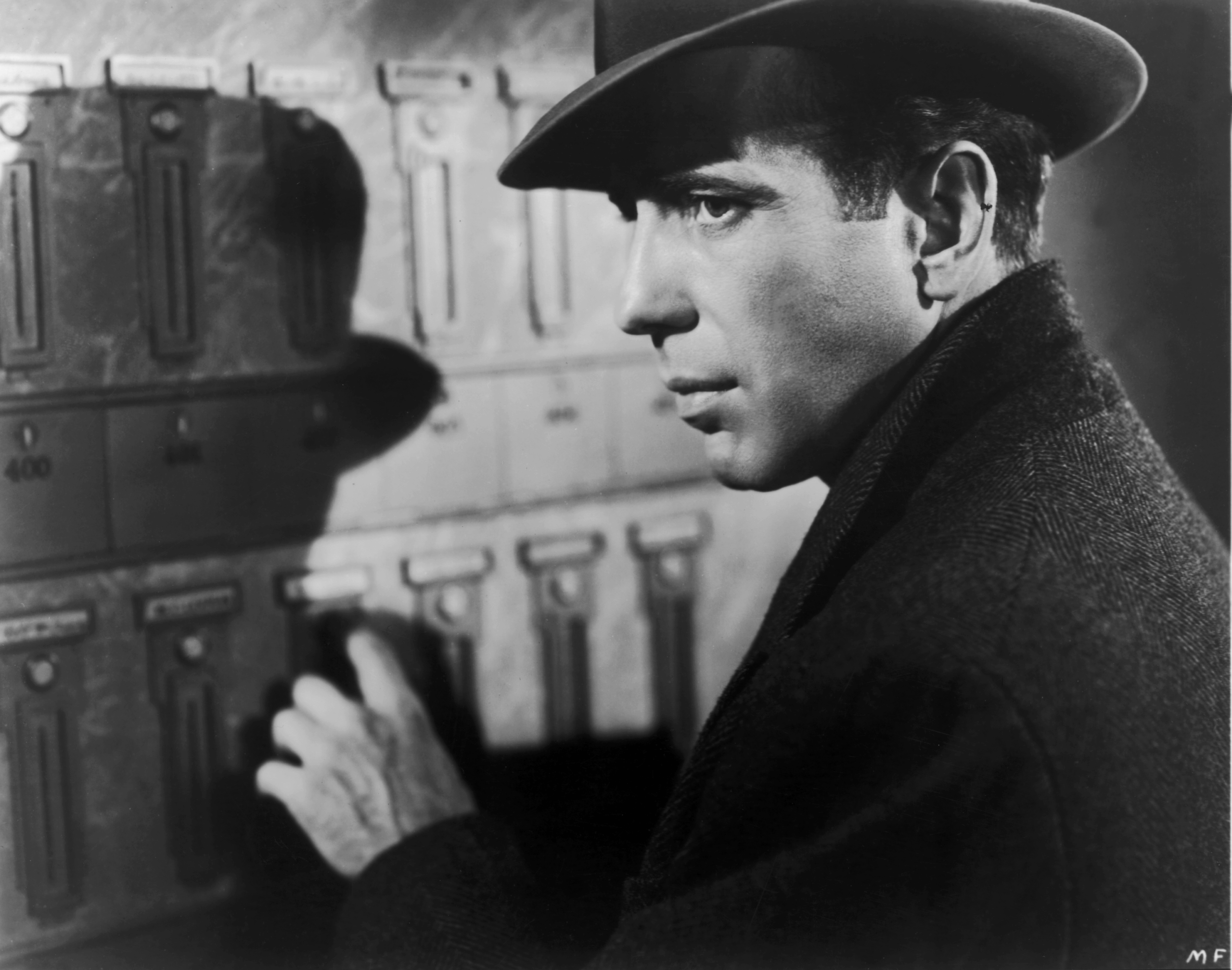
Humphrey Bogart’s final monologue in The Maltese Falcon defines the film’s noir legacy. Sam Spade explains the falcon’s fate with detached realism, and his tone conveys resignation rather than hope. The scene captures the essence of film noir, as shadows, dialogue, and performance create an atmosphere of uncertainty and moral compromise. The sequence demonstrates noir’s reliance on mood and psychological tension rather than straightforward resolution. Lighting choices and facial expressions become more pronounced, showing how tone and atmosphere can carry a story as much as plot.
The 85th anniversary of The Maltese Falcon will be in theatres nationwide December 6 & 9 as part of Fathom’s Big Screen Classics 2026.
The final act of It’s a Wonderful Life culminates in George Bailey, played by Jimmy Stewart, racing through Bedford Falls, greeting residents with relief and joy. The scene unfolds through sustained movement and sound as the town responds to George’s renewed purpose. Stewart delivers an open and sincere performance, and the emotional release feels both personal and communal.
The scene builds through repeated encounters that reinforce the film’s central theme of interconnectedness. George’s journey through town functions as a public acknowledgment of the lives he has affected and the support he receives in return. The town feels more vivid, and the crowd’s response becomes immediate. The scene shows how cinematic resolution gains strength through communal experience and represents hope without simplifying the human condition.
It’s a Wonderful Life returns to theatres nationwide December 18 – 24 for its 80th anniversary.
The films in this year’s Fathom’s Big Screen Classics series illustrate how careful construction created enduring moments. Each of them brings theme, character, and form into sharp focus, creating meaning through intent. Whether rooted in spectacle, psychological tension, humor, or restraint, these scenes rely on deliberate choices. They invite viewers to engage actively with the image and demonstrate how a filmmaker can shape both emotional and intellectual responses.
Sign up for our newsletter to keep up to date with all our screenings.




"*" indicates required fields

